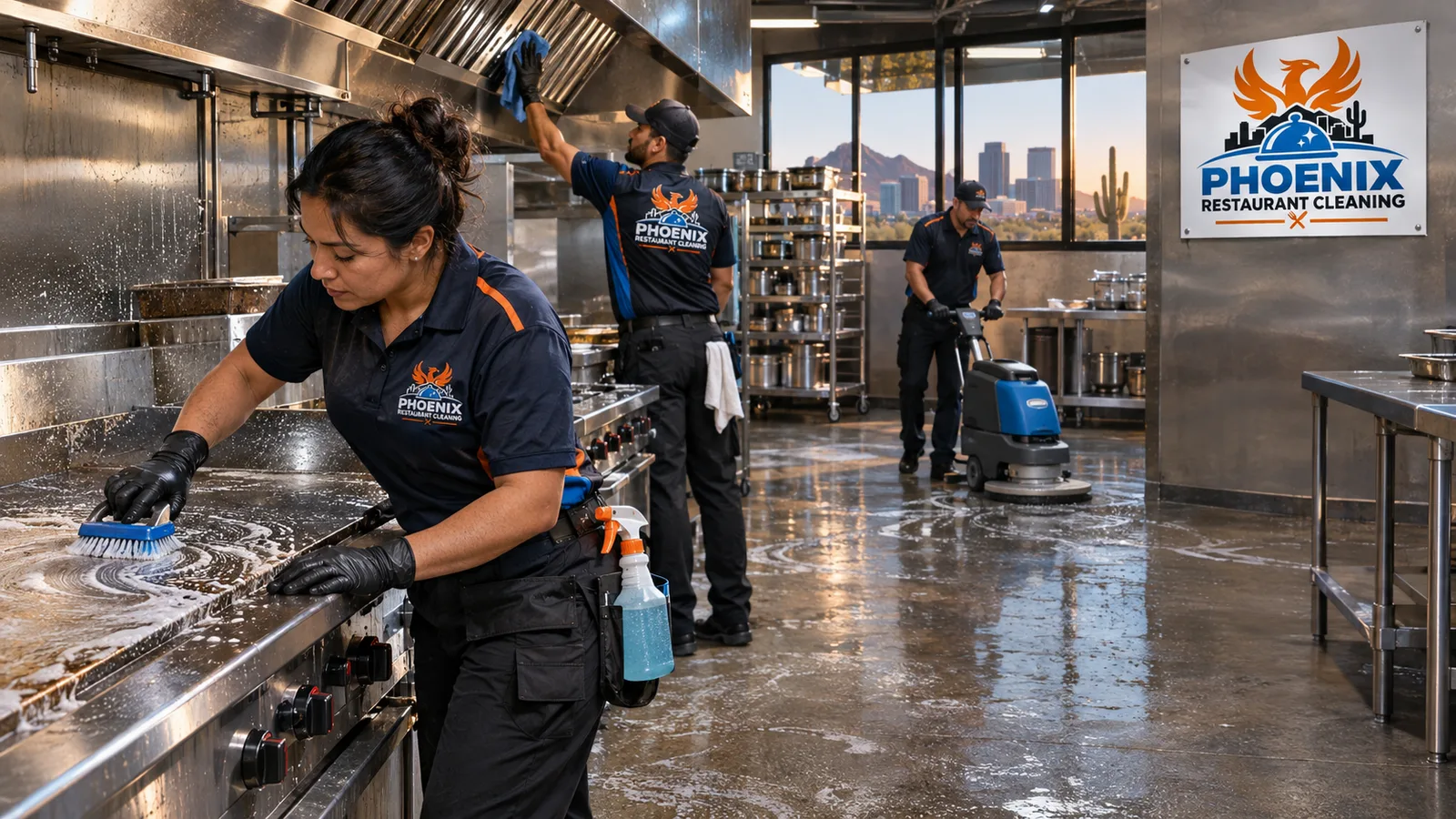
Trained commercial cleaning crew deep cleaning stainless steel cooking equipment and floors in a Phoenix restaurant kitchen after service
Restaurant Deep Cleaning · Phoenix, Arizona

Restaurant Cleaning Company in Phoenix

Detailed commercial cleaning built around your kitchen, equipment, access requirements, and operating schedule.

✓ Written, facility-specific scope
✓ Restaurant cleaning focus
✓ Surface-appropriate methods
✓ Scheduling around operations
Restaurant Cleaning Standards

Deep Cleaning Planned for Working Restaurants

A Restaurant Cleaning Company should understand that a commercial kitchen cannot be treated like an ordinary office. Grease migrates behind equipment, food debris collects along floor edges, and dust settles on overhead pipes, vents, and structural surfaces. Phoenix Restaurant Cleaning develops a written scope around the condition of the facility, the surfaces involved, equipment access, and the restaurant's operating hours.

With a focus on detailed work, Phoenix's trusted restaurant service team supports a cleaner back-of-house environment without disrupting normal operations more than necessary. Before work starts, the crew can identify priority areas, discuss which equipment may be moved safely, and set expectations for access, drying time, and completion. Restaurants near Downtown Phoenix may need work coordinated around event traffic and limited loading access, while properties in Roosevelt Row often operate in compact or adapted commercial spaces where staging must be carefully planned.

The goal is a defined, inspectable result. That means agreeing on what is included, protecting sensitive areas, using products suited to each surface, and checking the completed work against the scope.
Included Work

Restaurant Deep Cleaning Services

Kitchen Deep Cleaning

Degreasing and detailed cleaning may cover floors, walls, washable ceilings, prep surfaces, shelving, equipment exteriors, legs, casters, and accessible spaces behind or beneath units. The exact scope depends on surface condition and safe access.

Walk In Cooler Cleaning

Walk In Cooler Cleaning can include floors, walls, shelving, door surfaces, gaskets, and accessible fan guards. Food must be removed or securely protected, and cleaning products must be appropriate for food-storage environments.

High Dusting

High Dusting in Phoenix restaurants targets accessible pipes, beams, ledges, vents, light housings, and other elevated surfaces where dust and residue collect. Lift access, ceiling height, and the presence of active equipment affect the work plan.

Dining and Service Areas

Restaurant Detailed Cleaning may extend to dining-room floors, baseboards, partitions, fixtures, service stations, doors, and other high-touch surfaces. Materials such as sealed concrete, tile, wood, and stainless steel require different methods.

Back-of-House Detail Work

Dish areas, dry storage, employee areas, waste-zone approaches, and floor-to-wall transitions can be added to the scope. Special attention is given to edges and tight spaces that routine nightly cleaning may miss.

Scheduled Deep Cleaning

One-time service can address accumulated soil or prepare a facility for an inspection, opening, management change, or seasonal reset. Recurring visits can divide larger scopes into manageable cleaning cycles.

Request a Callback
Phoenix Kitchen Conditions

Commercial Kitchen Deep Cleaning in Phoenix

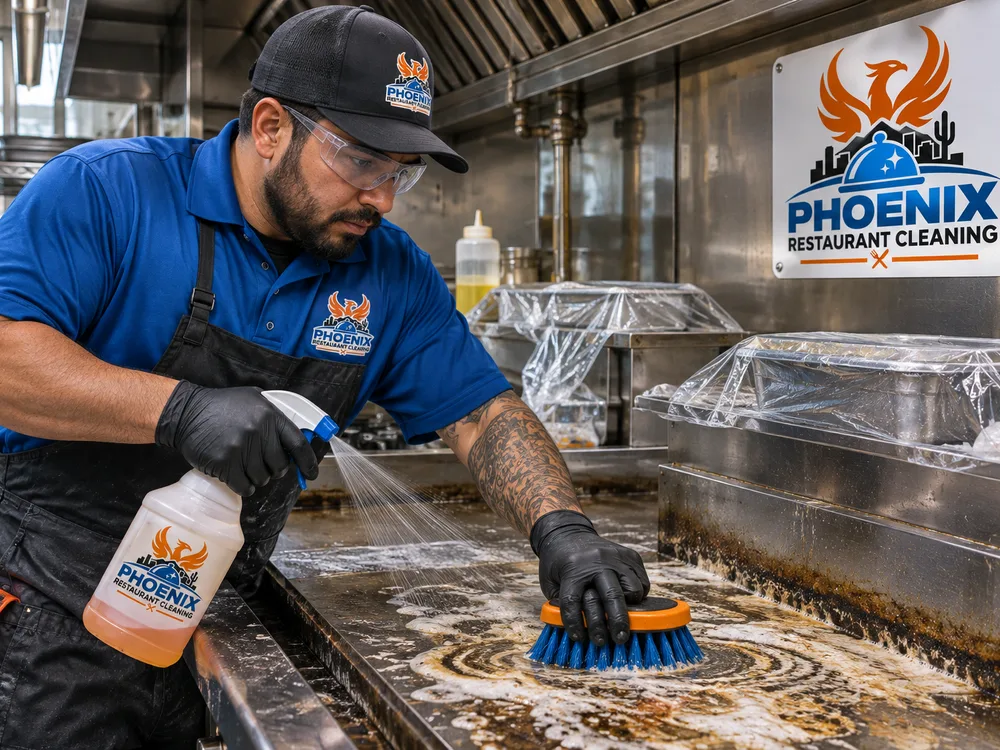
Commercial cleaner applying degreaser and agitating residue on a restaurant cookline with nearby food-contact surfaces protected
Cleaning methods and chemistry are selected for the surface and type of residue.

Phoenix heat and dry conditions affect restaurant cleaning in practical ways. Fine airborne dust can settle on high surfaces and mix with grease near cooking lines, creating residue that ordinary dusting does not remove well. Exterior doors opened for deliveries can add soil near receiving and storage areas. Hot weather also makes it important to coordinate cooler work carefully so doors are not left open longer than the agreed process requires.

Commercial Kitchen Deep Cleaning in Phoenix commonly begins with dry soil removal, followed by product application, dwell time, agitation, controlled rinsing or wiping, and recovery of loosened residue. Cleaning chemistry must match the surface. Strong alkaline degreasers may be suitable for some grease-resistant materials but can harm aluminum, painted finishes, or other sensitive surfaces. Crews should follow product labels, Safety Data Sheets, and manufacturer care instructions.

Restaurants in Arcadia often occupy neighborhood retail corridors where work must account for nearby tenants and customer-facing entrances. In the Warehouse District, larger floor plans and exposed overhead structures can increase the amount of high dusting and lift-access work. Along the Camelback Corridor, busy service schedules may make overnight or carefully phased cleaning the practical choice.

Request a Callback
How Service Works

How Professional Restaurant Deep Cleaning Works

  1. 01

    Facility Walkthrough and Scope

    The process starts with a review of the kitchen, cooler, dining areas, storage spaces, access points, and elevated surfaces. The written scope should state what is included, what is excluded, and whether equipment movement or lift access is required.

  2. 02

    Scheduling and Preparation

    Work is planned around service hours, deliveries, staff access, and building restrictions. The restaurant may need to remove food, clear shelves, shut down designated equipment, or provide access to locked spaces before the crew arrives.

  3. 03

    Protection and Dry Soil Removal

    Sensitive controls, exposed food-contact items, and nearby areas are protected as appropriate. Loose debris and dust are removed before wet cleaning so they do not turn into slurry or spread across the workspace.

  4. 04

    Degreasing and Detailed Cleaning

    The crew applies compatible products, allows the required dwell time, agitates buildup, and removes residue using controlled methods. Work proceeds through the agreed zones, including edges, undersides, casters, and accessible spaces behind equipment.

  5. 05

    Final Review

    Cleaned areas are checked against the scope, and any access limitations or remaining maintenance concerns are documented. Surfaces are left to dry as required before restaurant staff restore food, smallwares, or movable equipment.

Request a Callback
Scope and Access

What Restaurant Deep Cleaners Can and Cannot Address

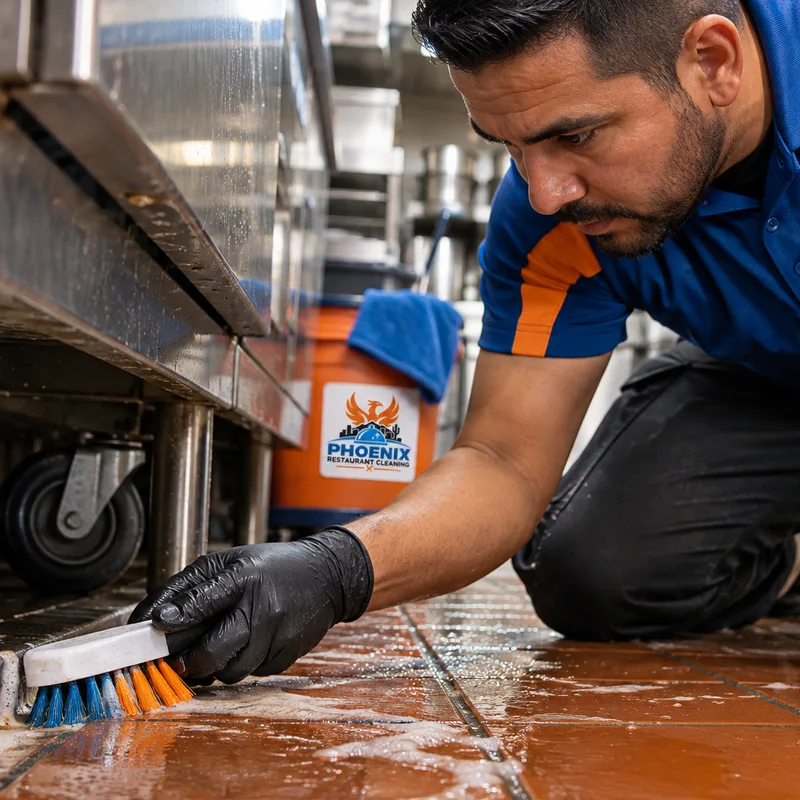
Commercial kitchen worker cleaning floor edges, equipment legs, casters, and accessible space beneath stainless steel equipment
Detailed work targets edges and equipment bases that routine cleaning often misses.

Professional Restaurant Deep Cleaning removes soil, grease, dust, and food residue from surfaces included in the scope. It does not repair failing grout, corroded metal, damaged floor coatings, worn gaskets, plumbing leaks, or equipment faults. Heavy buildup can also reveal permanent staining or finish damage once the soil is gone.

Kitchen exhaust systems require special care. Cleaning visible hood exteriors is different from cleaning exhaust ducts, fans, and concealed grease pathways. Any exhaust-system work should be clearly identified in writing and performed by a provider equipped for that specific scope. Likewise, pest treatment, hazardous-material removal, and mold remediation are separate services rather than ordinary restaurant cleaning.

Good access affects the result. Freestanding equipment may be movable when utilities, weight, casters, and manufacturer instructions allow it. Hard-connected gas appliances, heavy equipment, and units with fragile connections should not be moved casually. A walkthrough lets the crew distinguish accessible cleaning from work that requires a technician, facility representative, or special equipment.

Request a Callback
Choosing a Cleaning Team

Choosing a Restaurant Cleaning Company

Start with a scope detailed enough to compare providers fairly. It should identify the rooms and surfaces being cleaned, equipment movement limits, high-access requirements, responsibility for food removal, expected start and finish windows, and any areas that cannot be serviced. A broad promise to clean the kitchen leaves too much open to interpretation.

Control Cross-Contamination

Ask how the company prevents cross-contamination between restrooms, dining spaces, coolers, and food-preparation areas. Color-coded tools, clean cloth rotation, separate equipment where appropriate, and a clear sequence of work help control transfer between zones. Also ask how chemicals are selected and labeled, how Safety Data Sheets are handled, and what the crew does around sensitive finishes and electrical controls.

Confirm Phoenix Access Details

For a Restaurant Deep Cleaning Phoenix project, access planning matters as much as labor. Downtown loading conditions, shared retail parking, security procedures, elevator access, and overnight entry can change the crew size and schedule. Confirm those details before the service date. The estimate should also state whether disposal, lift rental, water access, or return visits are included.

Request a Callback
Phoenix Cleaning Costs

How Much Does Restaurant Deep Cleaning Cost in Phoenix?

Restaurant deep cleaning in Phoenix typically ranges from $500 to $2,500 for a defined one-time scope, while large kitchens, severe buildup, cooler work, or extensive high dusting may cost $3,000 or more. Smaller targeted jobs may fall below that range.

Final pricing depends on square footage, grease accumulation, equipment density, ceiling height, lift needs, utility access, scheduling, and whether equipment can be moved safely. Walk-in shelving removal and detailed floor-edge work also add labor. The exact cost is confirmed after a facility walkthrough or a review of detailed photos and scope requirements.

Request a Callback

Get a written cleaning scope that accounts for your operating hours, equipment access, priority areas, and the actual condition of the facility.

Frequently Asked Questions

Questions About Restaurant Deep Cleaning in Phoenix

How long does kitchen deep cleaning take?+

A targeted kitchen deep cleaning may take several hours, while a large or heavily soiled restaurant can require a full shift or phased visits. Equipment density, grease buildup, high surfaces, cooler contents, and safe drying time affect the schedule. Phoenix restaurants with strict overnight access windows should provide opening and closing deadlines during the walkthrough.

Can cleaning be scheduled after the restaurant closes?+

Yes, restaurant deep cleaning can often be scheduled after service when access and staffing allow. The plan should account for closing duties, alarm procedures, building security, loading access, and the time surfaces need to dry before opening. Properties in Downtown Phoenix may also have building-specific access or parking requirements.

Do we need to remove food before walk in cooler cleaning?+

Food should usually be removed from the work zone or placed in approved protected storage before walk in cooler cleaning begins. The restaurant remains responsible for food safety and temperature control unless another arrangement is documented. Shelving configuration, ice buildup, floor drains, and cooler operating condition should be reviewed before the service.

Can restaurant deep cleaners move cooking equipment?+

Crews may move light, freestanding equipment when it is safe and included in the written scope, but hard-connected or heavy appliances often require restaurant staff or a qualified technician. Gas lines, electrical connections, water lines, damaged casters, and manufacturer instructions determine what can be moved. These limits should be settled during the initial walkthrough.

Is high dusting performed over active food-preparation areas?+

High dusting should be completed when exposed food and clean smallwares have been removed or fully protected. The area beneath the work must be controlled because loosened dust can fall during agitation. Ceiling height, beams, pipes, light fixtures, and lift access determine the method and how long the area must remain out of use.

Can professional restaurant deep cleaning prepare us for a health inspection?+

Professional cleaning can address visible soil and buildup within the agreed scope, but it cannot guarantee an inspection outcome. In Phoenix, food establishments are regulated by the Maricopa County Environmental Services Department, and operators remain responsible for food safety, equipment condition, temperature control, and code compliance. Cleaning should complement the restaurant's own inspection checklist and corrective work.

How often should a restaurant schedule detailed cleaning?+

The right frequency depends on cooking volume, menu, equipment layout, ventilation, staffing, and the effectiveness of daily cleaning. A high-grease cookline may need detailed attention more often than a low-volume preparation space. Many operators use a rotating schedule for cooklines, coolers, storage areas, dining spaces, and high surfaces rather than waiting for every area to require the same level of work.

Plan a Cleaner, More Manageable Restaurant Deep Clean

Tell Phoenix Restaurant Cleaning about your facility, operating schedule, and priority areas. We will help define a practical scope before work begins.