
Cooking Line Equipment
Degreasing for accessible surfaces on ranges, ovens, fryers, griddles, charbroilers, salamanders, and other line equipment. Components are handled according to the agreed scope and manufacturer guidance.
Serving Phoenix, Arizona & surrounding areas
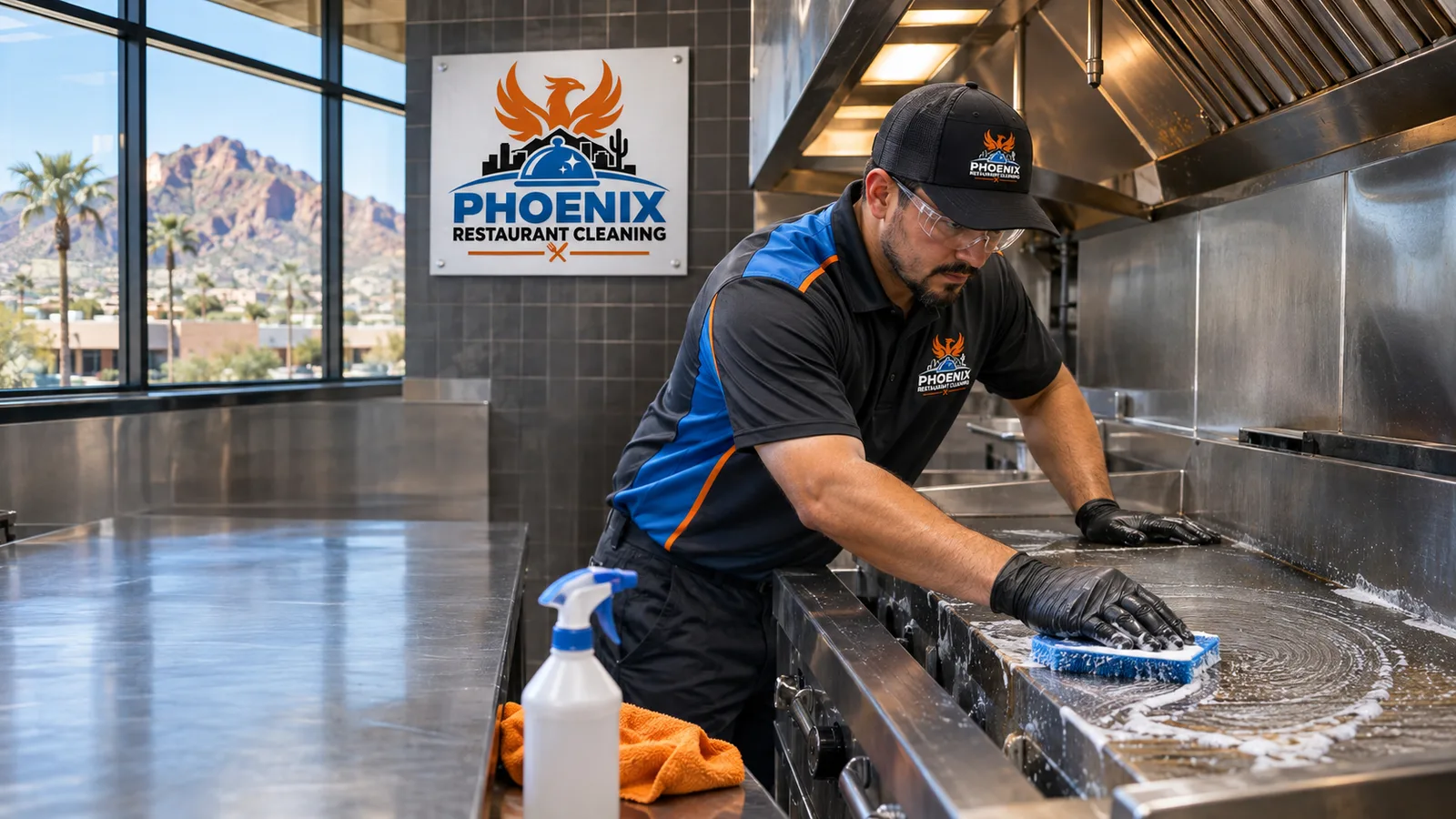
Detailed degreasing for commercial cooking equipment, prep areas, and hard-to-reach surfaces, scheduled around your kitchen's operating hours.
Restaurant Equipment Cleaning Scottsdale addresses the grease, carbon, food residue, and soil that routine closing work may leave behind. Phoenix Restaurant Cleaning cleans exterior and accessible interior surfaces on commercial equipment according to an agreed scope, with attention to seams, casters, control areas, splash zones, and the floor beneath movable units.
Our crew works as an experienced restaurant service team in Phoenix, AZ, bringing a practical process to Scottsdale restaurants that need thorough work without disrupting service more than necessary. Before cleaning begins, we identify the equipment included, confirm access requirements, note sensitive components, and plan around prep, service, and cooling times.
A detailed visit can be arranged as a one-time reset or as recurring maintenance. The right frequency depends on cooking volume, menu, equipment type, and how quickly grease returns. High-output fry and grill lines usually need more attention than low-grease prep equipment.
Degreasing for accessible surfaces on ranges, ovens, fryers, griddles, charbroilers, salamanders, and other line equipment. Components are handled according to the agreed scope and manufacturer guidance.
Cleaning for reachable exterior and approved interior surfaces on refrigerators, freezers, prep tables, and coolers. Food is removed or protected before work begins, and electrical parts are kept dry.
Removal of grease film, fingerprints, splatter, and soil from equipment fronts, worktables, backsplashes, shelving, and other washable stainless steel surfaces.
When equipment can be moved safely, the crew cleans exposed walls, floors, casters, sides, and utility-adjacent areas that ordinary mopping cannot reach.
Approved removable parts, racks, trays, grease pans, and similar items can be included when identified during scoping. Cleaning methods vary by material and soil level.
Knobs, handles, hinges, ledges, seams, and equipment legs receive focused cleaning because residue often collects around these high-touch or tight-access points.
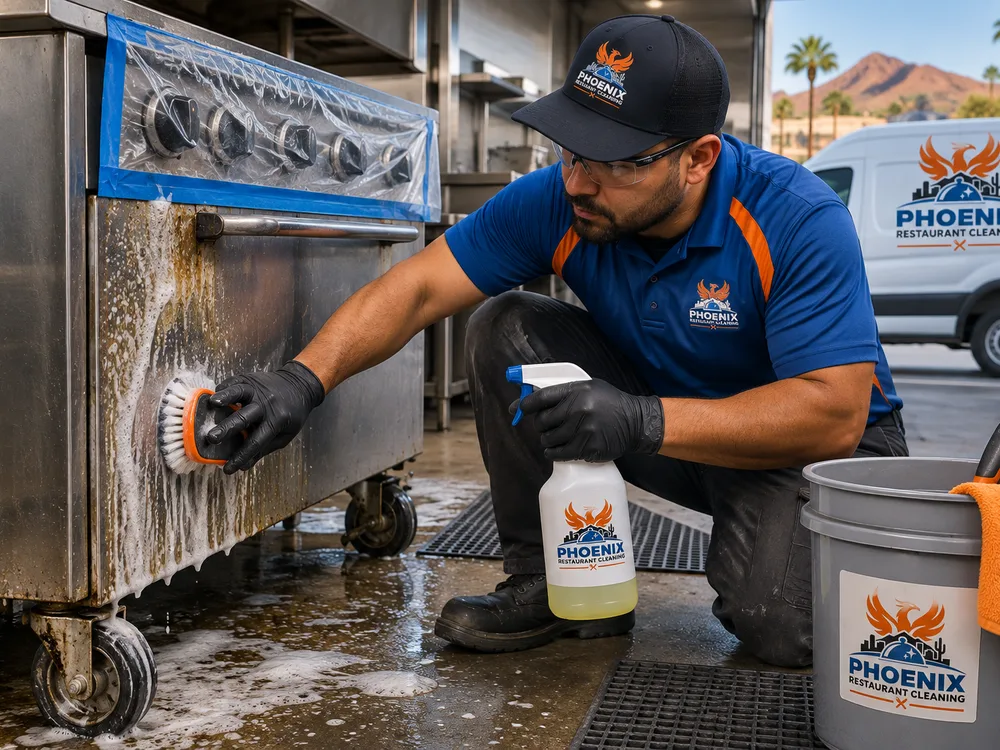
Commercial equipment cannot all be treated the same way. Painted panels, stainless steel, aluminum, rubber gaskets, glass, electrical controls, and food-contact components may require different products and methods. Our crew checks the surface before applying degreaser, uses controlled dwell time to loosen soil, and avoids flooding motors, control panels, igniters, outlets, and exposed utility connections.
Heavy carbon may need repeated applications and careful agitation rather than aggressive scraping. Food-contact surfaces require a rinse after cleaning, followed by an appropriate sanitizing step when included in the scope. Sanitizing is performed only after visible soil has been removed because grease and food residue interfere with proper surface contact.
Scottsdale presents varied operating conditions. Old Town restaurants may have compact kitchens, limited loading access, and narrow windows between late service and morning prep. Larger kitchens near Scottsdale Airpark may have longer cook lines and more equipment to sequence. Resort and event operations around the McDowell Sonoran Preserve area may need work coordinated around occupancy, banquets, or seasonal demand. These factors affect crew size, staging, and visit length.
We review the equipment list, soil level, access, operating schedule, and any surfaces that require special handling. The written scope identifies what will be cleaned and which items are excluded.
Food, utensils, paper goods, and clean smallwares are removed or protected. Equipment is shut down and cooled when required, and the crew confirms which units may be moved safely.
The team applies compatible products, allows suitable dwell time, agitates stubborn buildup, and cleans accessible faces, sides, components, and surrounding surfaces included in the scope.
Cleaner residue is removed where rinsing is required. Food-contact surfaces included in the work are sanitized with an appropriate product and allowed the labeled contact time.
The crew reviews completed areas, returns movable items to their agreed positions, and identifies any inaccessible buildup, damaged seals, or equipment concerns noticed during cleaning.
A clear scope prevents confusion on service day. Equipment cleaning may include degreasing accessible surfaces, washing approved removable components, detailing beneath movable appliances, and sanitizing designated food-contact areas. The exact work depends on the unit, its condition, and whether it can be shut down, cooled, emptied, disconnected, or moved safely.
Technicians do not disassemble gas, refrigeration, or electrical systems unless that work is specifically handled by a qualified equipment professional. Grease exhaust systems are also separate from ordinary appliance cleaning and may require specialized access and procedures. Damaged wiring, leaking connections, failed gaskets, loose controls, or pest evidence should be referred to the appropriate professional.
Restaurant Cleaning Scottsdale can also involve floors, walls, prep surfaces, and dining or support areas, but those items should be listed separately when the requested work extends beyond equipment. A written checklist keeps the visit focused and helps managers verify completion.
Request a CallbackRestaurant equipment cleaning in Scottsdale typically costs $300 to $1,500 for a scheduled visit. A few lightly soiled units may fall near the lower end, while a full cook line with heavy grease, carbon buildup, and difficult access may exceed the upper range. Final pricing depends on equipment count, appliance type, soil level, removable parts, shutdown time, access behind units, and whether surrounding floors or walls are included. Overnight scheduling and unusually intensive restoration can also affect labor. The exact cost is confirmed after the equipment and requested scope are reviewed.
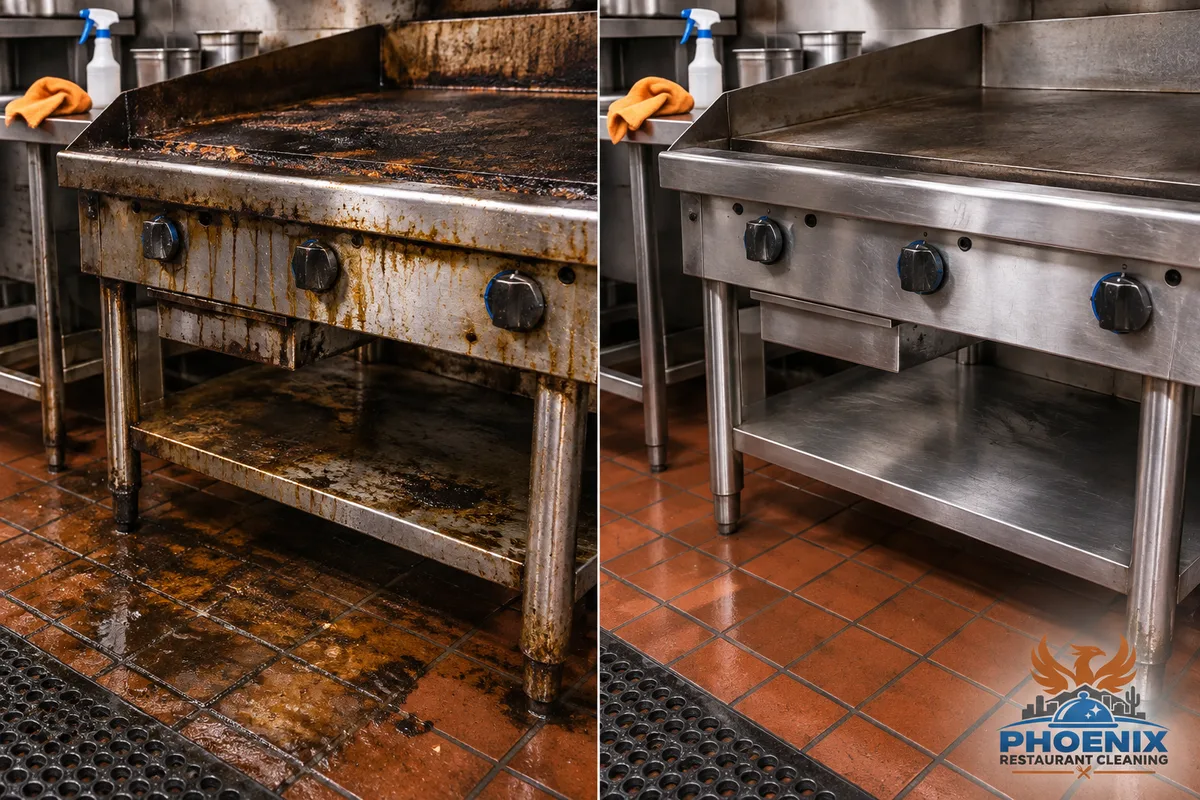
Recurring service keeps buildup from reaching the point where every appliance requires prolonged soaking and repeated agitation. The schedule should reflect actual kitchen use. A high-volume fryer station may need shorter intervals, while refrigerated prep equipment may follow a different cycle based on spills, dust, and gasket condition.
Scottsdale's hot, dry climate also affects planning. Exterior doors opened for deliveries can admit dust, which combines with airborne grease on equipment tops, condenser-adjacent areas, shelving, and ledges. Cleaning these accessible areas regularly helps prevent a sticky layer from becoming harder to remove. Equipment maintenance requirements still come from the manufacturer, and cleaning should never block ventilation openings or replace professional condenser, refrigeration, gas, or electrical service.
Managers can prepare by emptying designated units, labeling equipment that must remain on, arranging access, and sharing shutdown restrictions before the crew arrives. This reduces delays and makes the work window more predictable.
Get a written equipment list, defined cleaning scope, and scheduling plan that fits your prep and service hours.
A small equipment list may take several hours, while a full cook line or heavily soiled kitchen may require a full shift or more. The timeline depends on cooling requirements, grease and carbon levels, access behind units, and the number of removable components. Compact Old Town kitchens can also require extra sequencing because there is less room to stage equipment and supplies.
After-hours scheduling may be available when the scope and building access are confirmed in advance. Equipment that produces high heat must have enough time to shut down and cool before cleaning begins. Scottsdale kitchens with late service should identify which appliances can be turned off early and when morning prep staff need the line returned.
Customers should not disconnect gas, electrical, water, or refrigeration lines unless a qualified professional is handling that work. Freestanding equipment may be moved when it is safe, designed to move, and has adequate utility clearance. Fixed or connected units are cleaned in place, with inaccessible areas documented rather than reached unsafely.
Food-contact surfaces can be sanitized when they are included in the agreed scope and the equipment permits proper cleaning, rinsing, and contact time. Visible food and grease must be removed first. The kitchen should also remove exposed ingredients and clean smallwares from the work zone before the Scottsdale service begins.
Some carbon can be reduced substantially, but complete removal is not always possible without risking damage to the underlying finish. Heat tint, corrosion, etched metal, worn coatings, and permanent staining are material changes rather than removable soil. A test area helps determine a safe and realistic result.
The appropriate interval depends on the menu, production volume, appliance type, and closing routine. Fryers, griddles, and charbroilers often need more frequent degreasing than low-use cold-side equipment. After the first visit, the return of buildup can be reviewed to set a practical schedule for that specific Scottsdale kitchen.
Tell Phoenix Restaurant Cleaning which equipment needs attention, when the kitchen can shut down, and what buildup concerns you. We will help define the scope and prepare a practical service plan.