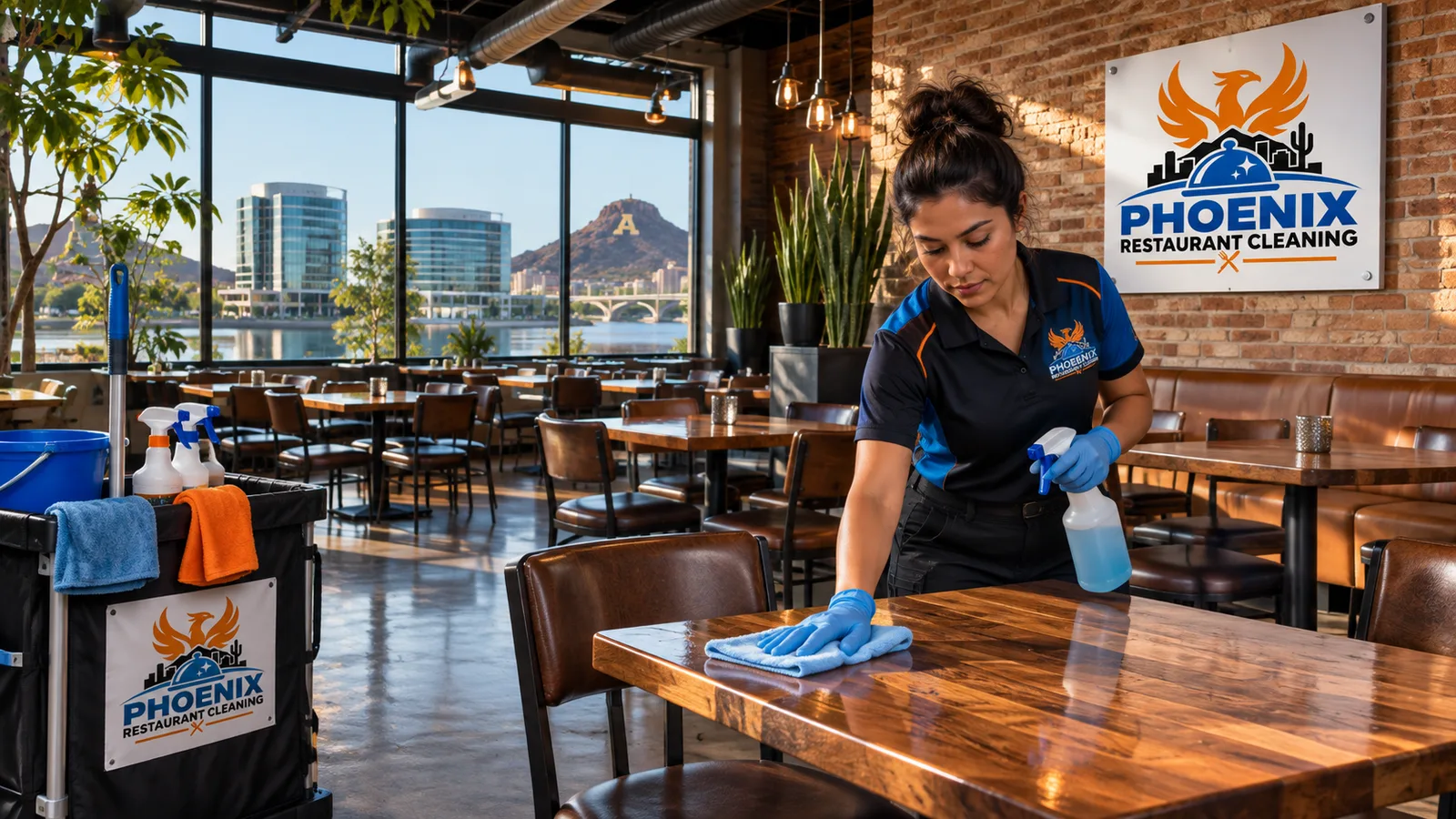
Commercial cleaner sanitizing tables in a polished Tempe restaurant dining room after closing
Restaurant Cleaning · Tempe, Arizona

Restaurant Cleaning Tempe

Reliable cleaning for kitchens, dining rooms, restrooms, and guest-facing areas, scheduled around your operating hours and documented with a clear scope.

✓ Room-by-room written scope
✓ Kitchen and dining areas
✓ Detailed restroom care
✓ Scheduling around operations
Tempe Cleaning Standards

Commercial Restaurant Cleaning Built Around Your Operation

Restaurant Cleaning Tempe requires more than a quick pass over floors and counters. Food residue, grease, tracked-in grit, restroom traffic, and late operating hours create a demanding cleaning environment. Phoenix Restaurant Cleaning develops a written scope around the rooms you need cleaned, the frequency of service, and the times your crew can work without disrupting guests or kitchen staff.

Our team operates as a professional restaurant service company in Phoenix, AZ and supports restaurant operators in nearby Tempe with recurring and detail cleaning. Each plan can define tasks by area, including dining-room floors, booths, host stations, employee spaces, restrooms, and accessible kitchen surfaces. Clear task lists help managers verify what was completed and flag an area that needs added attention.

Tempe restaurants face distinct traffic patterns. Mill Avenue businesses may need frequent attention to entrances and restrooms because of pedestrian activity and late hours. Restaurants near Arizona State University's Tempe campus can experience sharp changes in volume around classes, games, and events. Marketplace and entertainment areas near Tempe Marketplace may need service timed around busy evenings, while restaurant clusters along Apache Boulevard often require schedules that accommodate both dine-in and takeout activity.
Included Work

What Tempe Restaurant Cleaning Can Cover

Dining and Guest Areas

Service may include table bases, booths, chairs, host stands, partitions, ledges, doors, spot cleaning, and floor care. High-touch points receive particular attention because many guests and employees contact them during a shift.

Kitchen Cleaning

Cleaning plans can address floors, wall splashes, sinks, prep surfaces, equipment exteriors, and other accessible areas approved in the scope. Food-contact surfaces require compatible products and the correct wash, rinse, and sanitize procedure.

Restaurant Restrooms

Restroom service can include toilets, urinals, sinks, partitions, mirrors, dispensers, touchpoints, floors, and odor-source cleaning. Restocking can be added when supplies and responsibilities are agreed upon.

Floors and Entryways

Vacuuming, sweeping, mopping, and suitable machine cleaning remove crumbs, spills, grease film, and abrasive soil. The method is selected for tile, sealed concrete, resilient flooring, carpet, or another installed surface.

Employee Areas

Break rooms, offices, hallways, and employee restrooms can be included so back-of-house spaces receive the same consistent attention as guest areas.

Periodic Detail Work

Scheduled detail work targets buildup on edges, baseboards, vents, wall areas, furniture legs, and other places that routine nightly tasks may not fully address.

Request a Callback
Restaurant Restroom Care

Restaurant Bathroom Cleaning Tempe Guests Notice

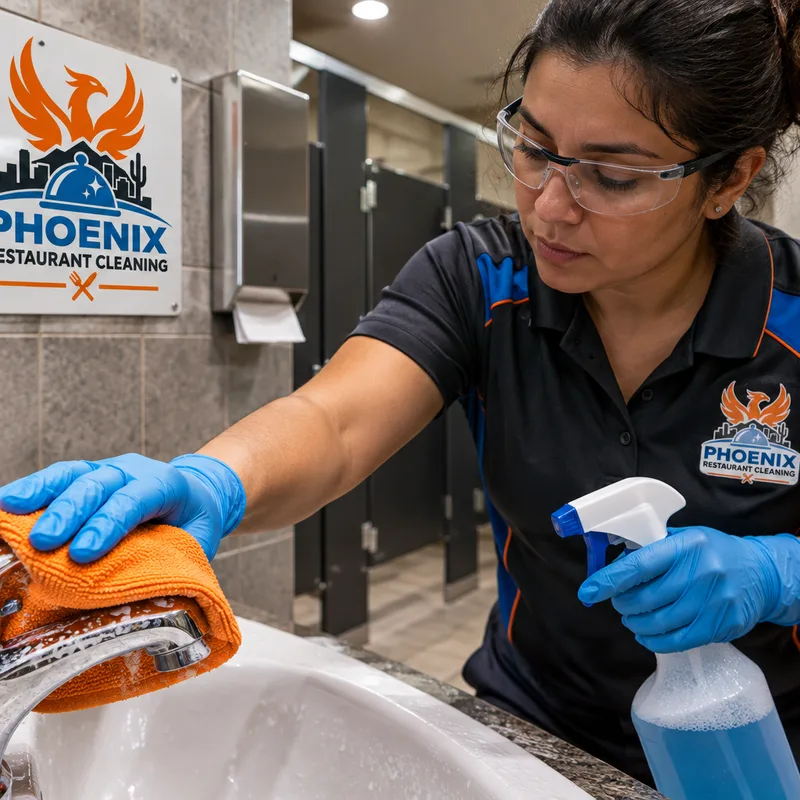
Commercial cleaner disinfecting a restaurant restroom sink and faucet beside stocked dispensers and a dry floor
Restroom care should remove soil and odor sources while respecting product contact times.

A restaurant restroom affects the guest's impression of the entire operation. Effective Restaurant Bathroom Cleaning Tempe service addresses visible soil and the less obvious sources of odor, including grout lines, floor edges, partitions, fixture bases, drains, and areas around waste containers. Simply adding fragrance does not remove an odor source.

The process should match the surface and level of soil. An alkaline cleaner can help break down body oils and greasy residue, while mineral deposits may require an appropriate acidic product used only on compatible materials. Disinfectants must remain visibly wet for the product label's stated contact time. Applying a disinfectant and wiping it away immediately can prevent it from working as directed.

A practical restroom checklist covers fixtures, mirrors, dispensers, door hardware, grab bars, partitions, floors, and supply levels. It should also identify recurring issues such as leaking fixtures, damaged grout, loose dispensers, or persistent drain odors so management can arrange repairs rather than repeatedly cleaning around the problem.

Request a Callback
How Service Works

How a Restaurant Cleaning Plan Is Set Up

  1. 01

    Walk Through the Restaurant

    The first step is to review the kitchen, dining room, restrooms, entrances, employee areas, floor types, access points, and current trouble spots. Operating hours and security procedures are discussed at the same time.

  2. 02

    Define the Scope

    Tasks are assigned by room and frequency. The scope identifies routine work, periodic detail cleaning, exclusions, product considerations, and whether your restaurant supplies consumables such as paper goods and soap.

  3. 03

    Schedule Around Service

    Cleaning may be arranged after closing, before opening, or during another approved window. Restaurants near ASU and Mill Avenue may benefit from adjusting detail work around game days, university events, or other periods of heavier guest traffic.

  4. 04

    Complete and Check the Work

    Crews follow the agreed checklist and use separate tools where cross-contamination control matters. Supervisory checks and manager feedback help keep recurring work aligned with the written scope.

  5. 05

    Revise as Conditions Change

    Patio use, menu changes, seasonal traffic, and extended hours can change cleaning needs. The plan can be updated when an area requires more frequent care or a periodic task needs to be added.

Request a Callback
Food-Service Cleaning Methods

Cleaning Methods That Fit Food-Service Environments

Cleaning and sanitizing are different steps. Cleaning removes food, grease, and soil. Sanitizing reduces microorganisms on a cleaned food-contact surface when the product is used at the correct concentration and for the required contact time. Disinfecting is commonly applied to suitable non-food-contact surfaces, including restroom fixtures and certain high-touch points. Product labels determine where and how each chemical may be used.

Cross-contamination controls matter. Color-coded microfiber cloths and dedicated restroom tools help prevent a mop head or cloth used near toilets from moving into dining or food-preparation areas. Clean-to-dirty work order, fresh solution, and proper tool storage further reduce soil transfer. Safety Data Sheets should be available for workplace chemicals, and products must never be mixed unless their labels expressly permit it.

Tempe's dry climate also affects entrances and floors. Wind and foot traffic can carry fine dust indoors, where it dulls hard flooring and settles on ledges. Dry soil should be removed before wet mopping; otherwise, it can turn into residue and leave streaks. During monsoon weather, entry mats and prompt spill response become more important because moisture and tracked-in debris can create slip concerns.

Request a Callback
Site-Specific Scope

A Reliable Scope, Not a One-Size Checklist

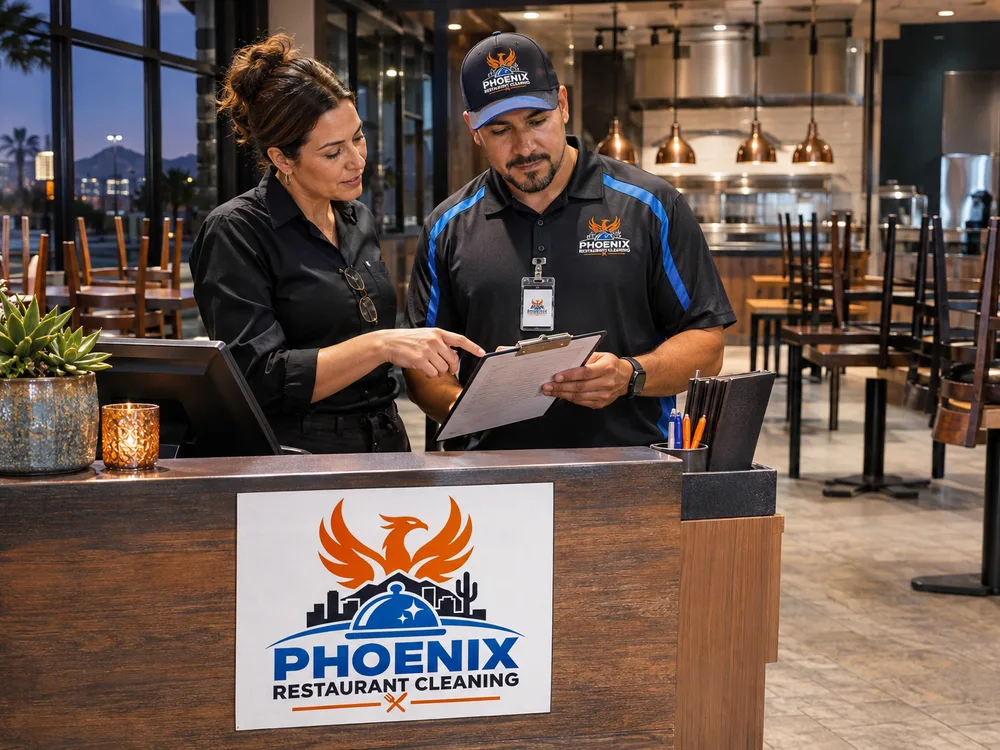
Restaurant manager and commercial cleaning supervisor reviewing a room-by-room checklist at a clean host station

A coffee shop, quick-service counter, full-service dining room, and late-night restaurant do not generate the same soil or follow the same schedule. The cleaning plan should reflect guest volume, menu-related grease, number of restrooms, patio use, floor materials, and the amount of work employees complete during closing.

Phoenix Restaurant Cleaning can separate daily tasks from weekly or periodic work. Daily duties may focus on restrooms, floors, touchpoints, and visible guest areas. Periodic work can address corners, baseboards, furniture undersides, grout, and machine floor care where the surface permits it. This approach keeps the recurring scope practical while preventing detail work from disappearing behind urgent nightly tasks.

A written proposal should state service frequency, included rooms, approved work window, access arrangements, and responsibilities for consumables or specialized equipment. If a task is outside routine janitorial cleaning, it should be identified before service begins. That distinction helps restaurant managers compare proposals on actual scope rather than price alone.

Request a Callback
Clear Service Planning

Get a written cleaning scope based on your restaurant's rooms, operating schedule, floor materials, and recurring problem areas.

Call for a Free Quote
Frequently Asked Questions

Questions About Restaurant Cleaning in Tempe

How much does restaurant cleaning cost in Tempe?+

Restaurant cleaning is usually quoted after a walkthrough because square footage alone does not define the workload. Price depends on service frequency, number of restrooms, kitchen scope, floor materials, soil level, operating hours, access, and periodic detail tasks. A Tempe restaurant with heavy late-night traffic may need a different schedule than a small daytime cafe. The written proposal should identify exactly what is included before recurring service starts.

Can cleaning be completed after the restaurant closes?+

Yes, after-hours cleaning can be arranged when access, alarm procedures, approved work times, and closing responsibilities are agreed upon. Restaurants around Mill Avenue or the ASU Tempe campus may have closing times that change during events. Those variations should be discussed during scheduling so the crew does not conflict with guests, employees, or deliveries.

How often should a restaurant restroom be professionally cleaned?+

The right frequency depends on guest volume, hours, fixture count, and what employees handle during service. A high-traffic restroom may require staff checks throughout operating hours plus a thorough scheduled cleaning after closing. The professional scope can cover fixtures, partitions, touchpoints, floors, dispensers, and odor-source cleaning, while the restaurant's staff handles checks and urgent spills between visits.

Do you clean restaurant kitchens as well as dining areas?+

Kitchen areas can be included when the exact surfaces and tasks are approved in the scope. Routine work may cover floors, wall splashes, sinks, prep surfaces, and accessible equipment exteriors. Hood and duct cleaning, internal appliance work, pest control, and other specialized tasks should be identified separately because they require different methods, equipment, or vendors.

Can the cleaning products be selected for our surfaces and food-service setting?+

Yes, products should be chosen according to the surface, soil, intended use, and label directions. Natural stone, grout, sealed concrete, resilient flooring, stainless steel, and food-contact surfaces may require different chemistry. Restaurant managers should also disclose manufacturer restrictions and any preferred products before work begins.

How quickly can recurring Restaurant Cleaning Tempe service begin?+

The start date depends on walkthrough availability, scope approval, staffing, access arrangements, and the requested schedule. A straightforward recurring plan can often be organized faster than a restaurant requiring extensive initial detail work. The walkthrough establishes current conditions and whether a one-time reset should occur before routine service.

Can service change during ASU events or busier seasons?+

Yes, cleaning frequency and detail work can be adjusted when guest traffic or operating hours change. Restaurants near Arizona State University's Tempe campus may need added entry, floor, dining-room, or restroom attention around games and major events. Planned adjustments are easier to staff than last-minute changes, so known dates should be discussed in advance.

Plan Consistent Cleaning for Your Tempe Restaurant

Tell Phoenix Restaurant Cleaning about your operating hours, floor types, restrooms, kitchen scope, and current problem areas. We will help define a practical cleaning plan and a clear schedule for your business.