Grease Removal Without Treating Every Floor the Same
Effective restaurant floor cleaning starts with identification. Quarry tile and cementitious grout often tolerate alkaline degreasers and mechanical agitation, while luxury vinyl tile, sheet vinyl, sealed concrete, ceramic tile, and coated floors may require different chemistry, pads, brushes, and moisture controls. Using an aggressive chemical or abrasive tool on the wrong surface can dull a finish, damage a coating, or leave residue that attracts soil.
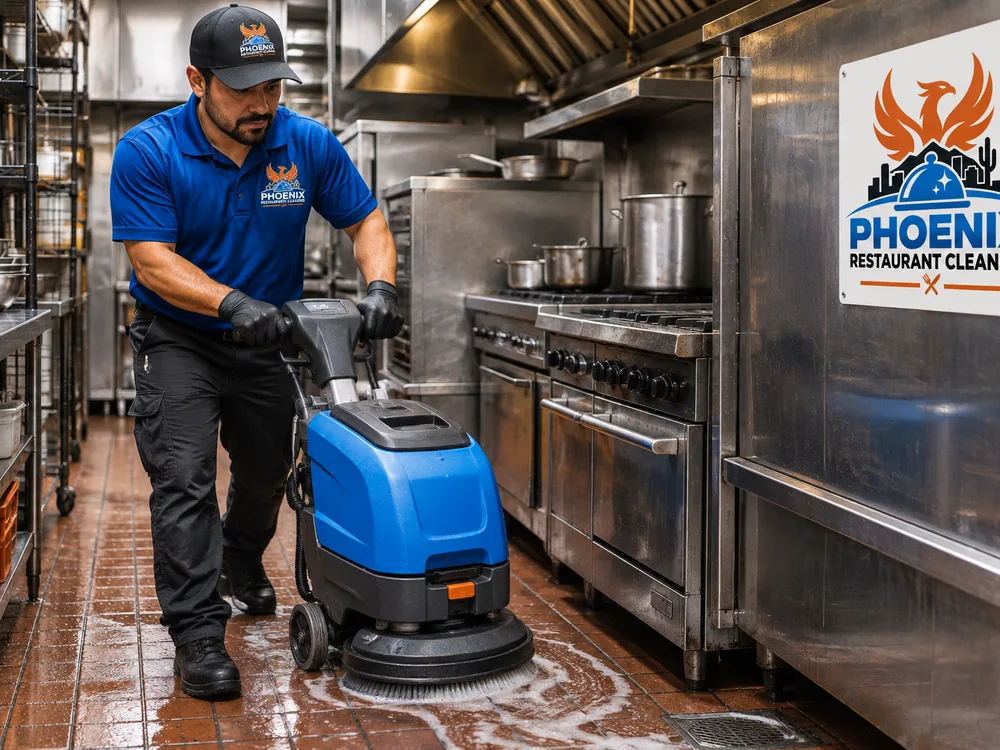
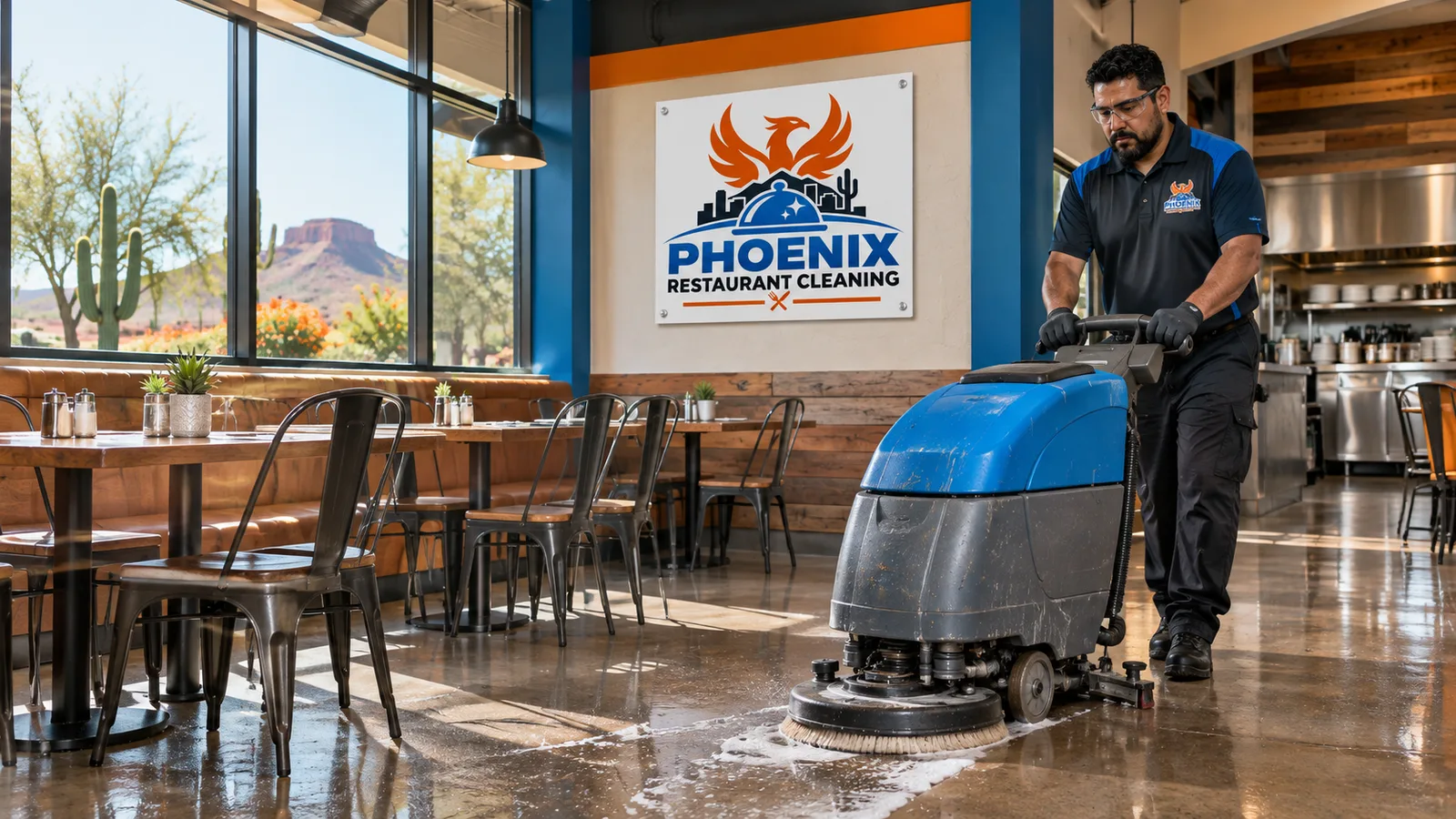
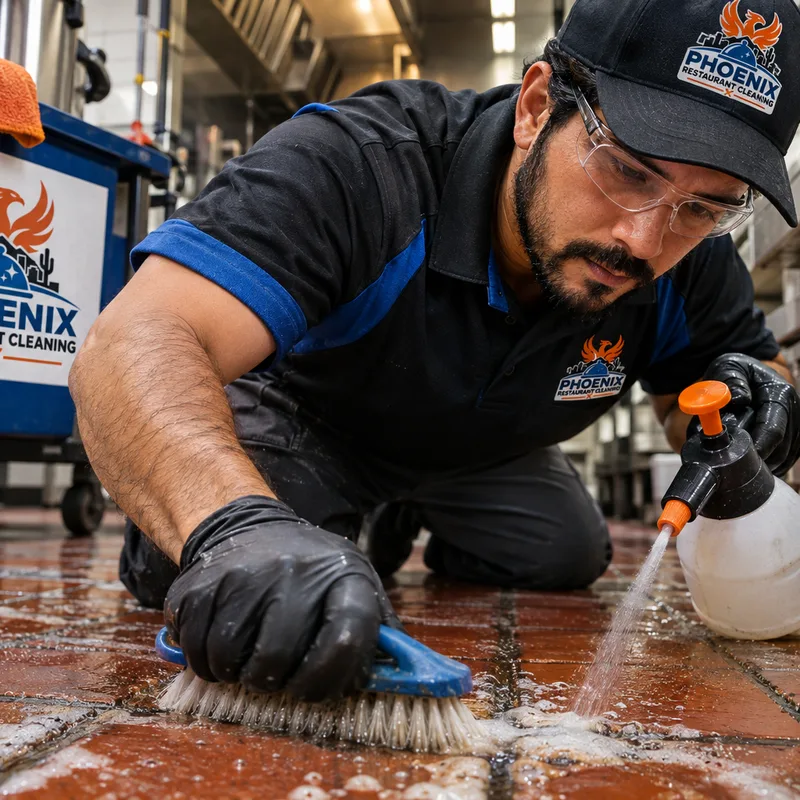
We begin with dry soil removal, then apply a compatible cleaner at the proper dilution. The product needs time to loosen oil and embedded grime before agitation. A rotary machine, autoscrubber, deck brush, or grout brush may be used according to access and floor type. Edges, corners, kick plates, thresholds, and the floor around fixed equipment receive separate attention because large machines cannot reach them.
Soiled solution should be recovered rather than spread across the room. Depending on the surface and chemical, the floor is then rinsed and recovered again. This matters in commercial kitchens, where detergent residue can leave a tacky film and contribute to rapid resoiling.